

Incense Sticks vs Cones: Which Is Better for Your Space?
Short answer: incense sticks are usually the easier choice when you want a steady, familiar ritual and simple holder compatibility. Incense cones create a more compact burn area and can suit enclosed burners or backflow designs, but they require closer attention to heat, airflow and cleanup. Neither format is universally better—the right choice depends on your room, holder and preferred pace.
CutepidClub does not currently sell standalone incense sticks or cones. This guide is general education; always follow the instructions supplied by the incense maker and confirm that the format fits your holder or burner.
The practical difference between sticks and cones
A stick burns along a narrow line, with ash falling progressively as the ember moves downward. A cone burns from its tip toward a wider base, concentrating heat and residue in a smaller area. Backflow cones are a separate cone format designed to direct smoke through a channel in a compatible backflow burner.
That physical difference affects more than appearance. It changes the kind of holder you need, how much ash you will collect, where the piece can sit and how closely you should monitor the surface beneath it.

Choose incense sticks when you value flexibility
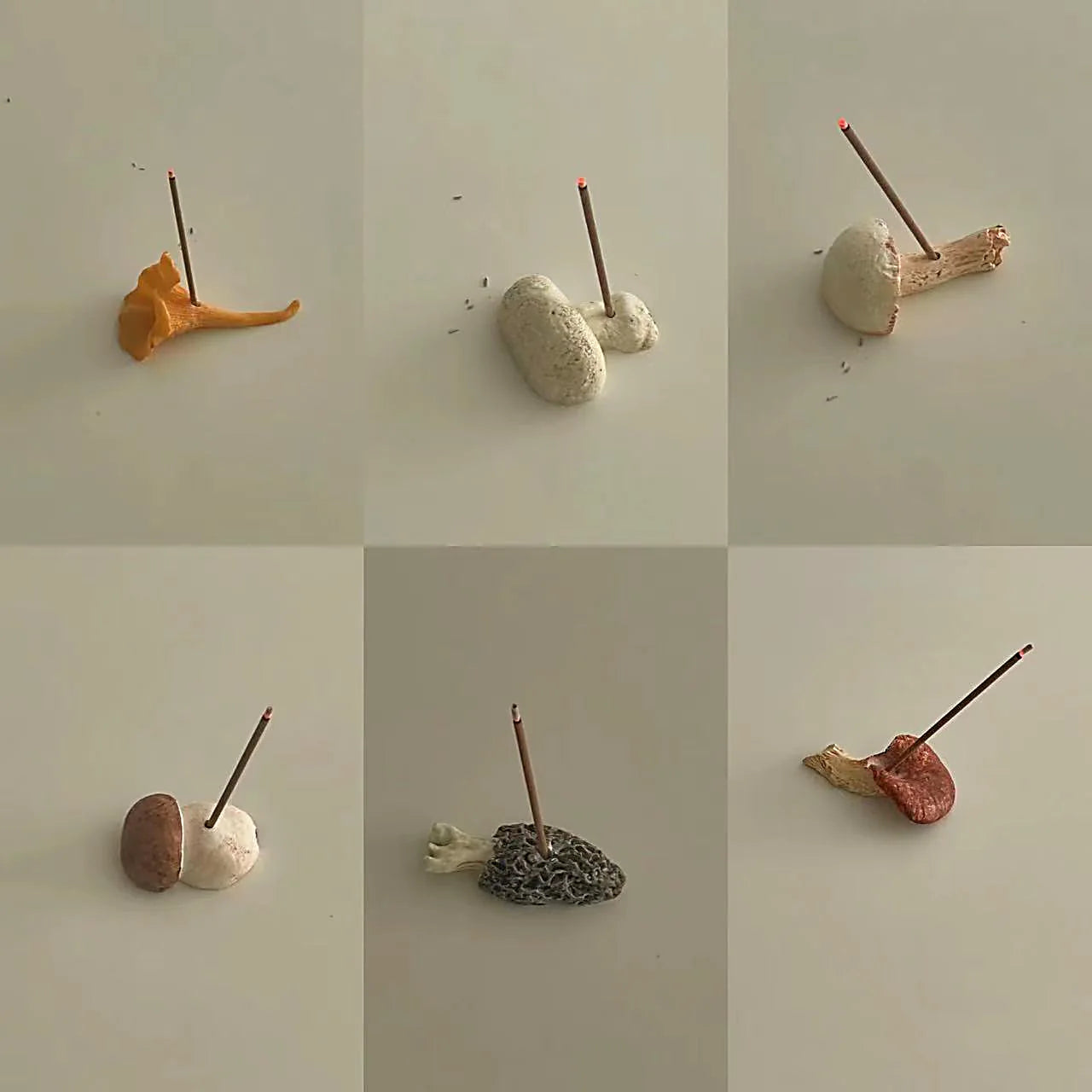
Sticks work best with a holder that keeps the stick upright or at a controlled angle while catching the full ash trail. Before lighting, check the hole diameter and depth: a loose stick may lean, while a stem that is too wide may not fit at all.
- Good for: a familiar, gradual ritual and a broad choice of compact holders.
- Plan for: a long enough ash-catching surface and clearance above the ember.
- Check first: stick thickness, holder angle and nearby drafts.
Small sculptural holders can make the object feel considered even when it is not in use. The Shinymomo Woodland Mushroom Incense Holder Set, for example, shows how multiple small holders can be arranged as individual objects; incense compatibility should still be checked against the stick you plan to use.
Choose cones when you want a compact burn area
Standard cones sit on a stable, heat-resistant surface or inside a burner designed for them. Because heat and residue stay concentrated beneath the cone, the base matters as much as the outer form. Make sure the burner has adequate ventilation and never place a lit cone directly on furniture.
- Good for: enclosed or sculptural burners made for cone incense.
- Plan for: localized heat, a small residue mark and cooling time after use.
- Check first: the maker’s compatibility guidance and ventilation openings.
The Childish Play Red Roof Cottage Incense Burner Gift Set is a hand-painted ceramic burner designed around cone incense; its chimney guides fragrance upward. The product page lists exactly what is included with the set.
Where backflow cones fit
Backflow cones have an internal channel that works with a compatible burner to create a downward smoke path. A regular cone may burn in a backflow burner but will not necessarily create the intended effect. The reverse is also true: do not assume every cone burner is built for backflow smoke.
A backflow design such as the Lighthouse Backflow Incense Burner should be paired only with incense that matches the burner’s instructions. The visual smoke path also depends on still air, so fans and open windows can interrupt it.

A simple decision checklist
- Choose sticks if you already own stick incense and want a compact, open holder.
- Choose cones if your burner is specifically shaped and ventilated for cones.
- Choose backflow cones only for a compatible backflow burner.
- Prefer a wide ash-catching base if cleanup is your main concern.
- For a small room, prioritize ventilation and follow the incense maker’s directions rather than relying on an assumed burn time.
Safe use matters more than format
Place any incense setup on a stable, nonflammable, heat-resistant surface in a ventilated room. Keep it away from curtains, paper, bedding, children and pets. Never leave burning incense unattended, and allow the burner to cool fully before moving or cleaning it. If smoke becomes uncomfortable, extinguish the incense safely and ventilate the room.
Explore the current Incense Holders & Burners collection to compare forms, materials and compatible formats. Product pages—not this general guide—are the source of truth for what each item includes.